Octophonic is a 50-minute electronic music composition in a self-developed 60-tone just intonation system, presented as an octophonic sound installation across eight speakers in a 360° field. It moves between the meditative and the physical, between tuning theory and club culture, between field recording and synthesis, without settling in any of them for too long.
It began with a small plug-in I built around just intonation and FM modulation. Sixty tones laid out in mathematical relationships, closer to a chemistry table than a keyboard.
Placement became as important as pitch itself. Moving a frequency from one speaker to another changes it. The eight channels aren't just a format. They are part of the composition.
After ten days in this room, this is what the piece is really about: openness. Exploring, being inspired, and using these tools in particular ways.
Twenty-three configurations
for eight channels.
Three threads running at once.
Some passages live entirely inside the 60-tone system, then break out of it through FM modulation to generate short, drum-like fragments and bells. FM is a little like someone holding a long tone with their voice and gently shaking their throat with their hands. It begins to ripple, and if you push that vibration fast enough, like a machine, it becomes bells and percussion.
I wanted to see how far I could push a single plug-in, how much range and character I could pull from something deliberately narrow.
Some recordings are new, made in the forest early in the morning. Others come from Numedal, where we got access to one of Norway's oldest hydroelectric plants. The result is a heavy, physical sound that accelerates until a single resonant frequency bends and rises to the surface as one long tone.
There's also a recording of black grouse lek, the male grouse's mating ritual, which only happens in a short window each year, around five in the morning. The females sit in the trees making a soft, continuous drone, and the males come in with these strange, almost vampiric calls before meeting on the ice to fight.
One approach is to treat the field recordings directly, in parallel with the music. Another is to let a recording dictate the composition: take a ten-minute recording and try to recreate its shape and texture with analog and digital gear.
Black metal and folk music both fit the concept well. From there I moved into more rhythmic, krautrock-inspired one-man-orchestra material, then into techno, trance and club music in subtler ways, and finally into ambient, trying to keep the meditative quality but pushing it somewhere more musical.
Hans Kjorstad generously let me use fragments from Kjære min maur by the Kjorstad Brothers; they run for about two minutes in the middle of the production. I tried opposite approaches with the sampling: one with very limited editing, another where the harp is used as rhythm, and one transformed beyond recognition.
Photos & Video
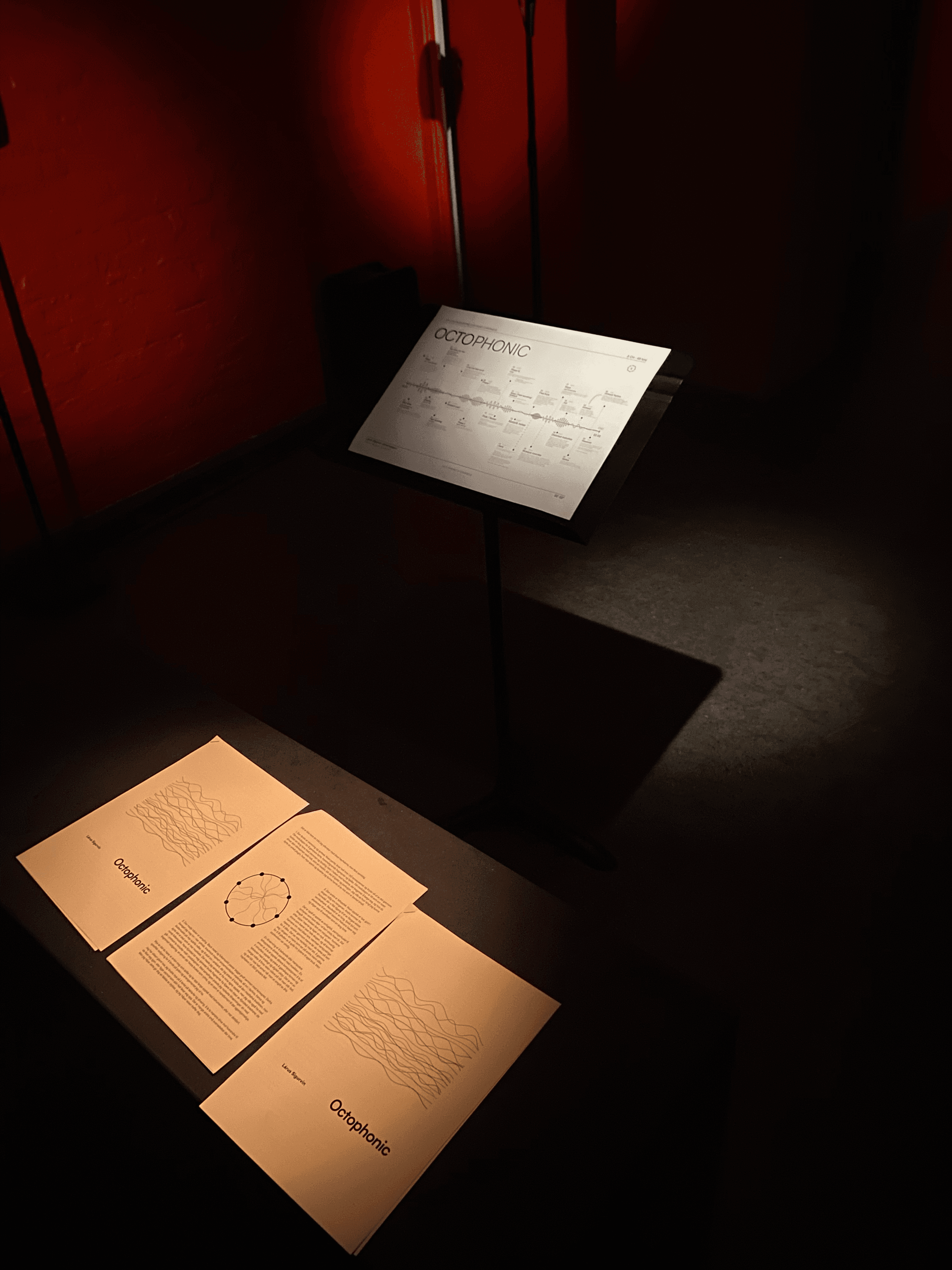
Installation, Vestre, Bergen
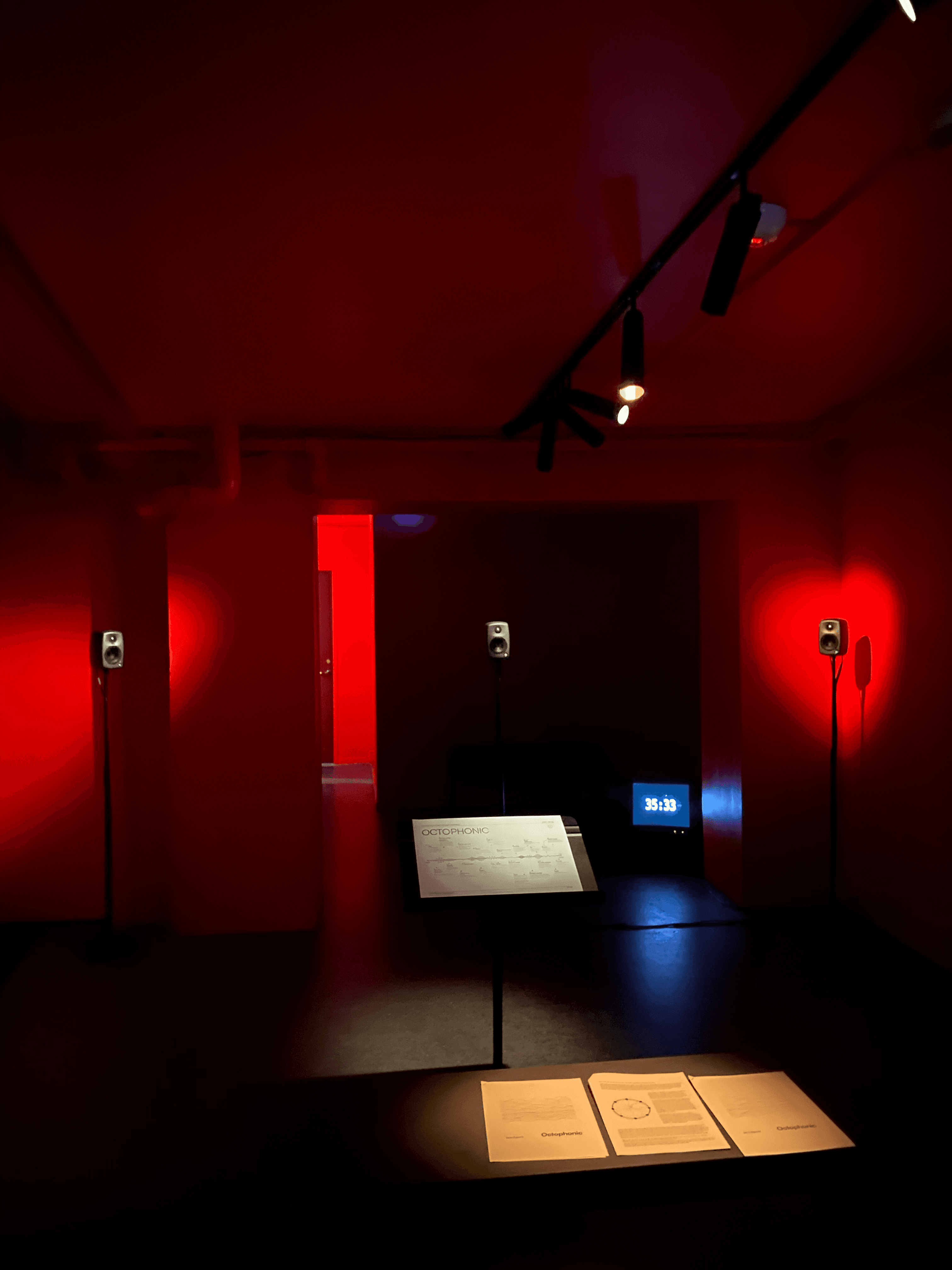
Installation, Vestre, Bergen
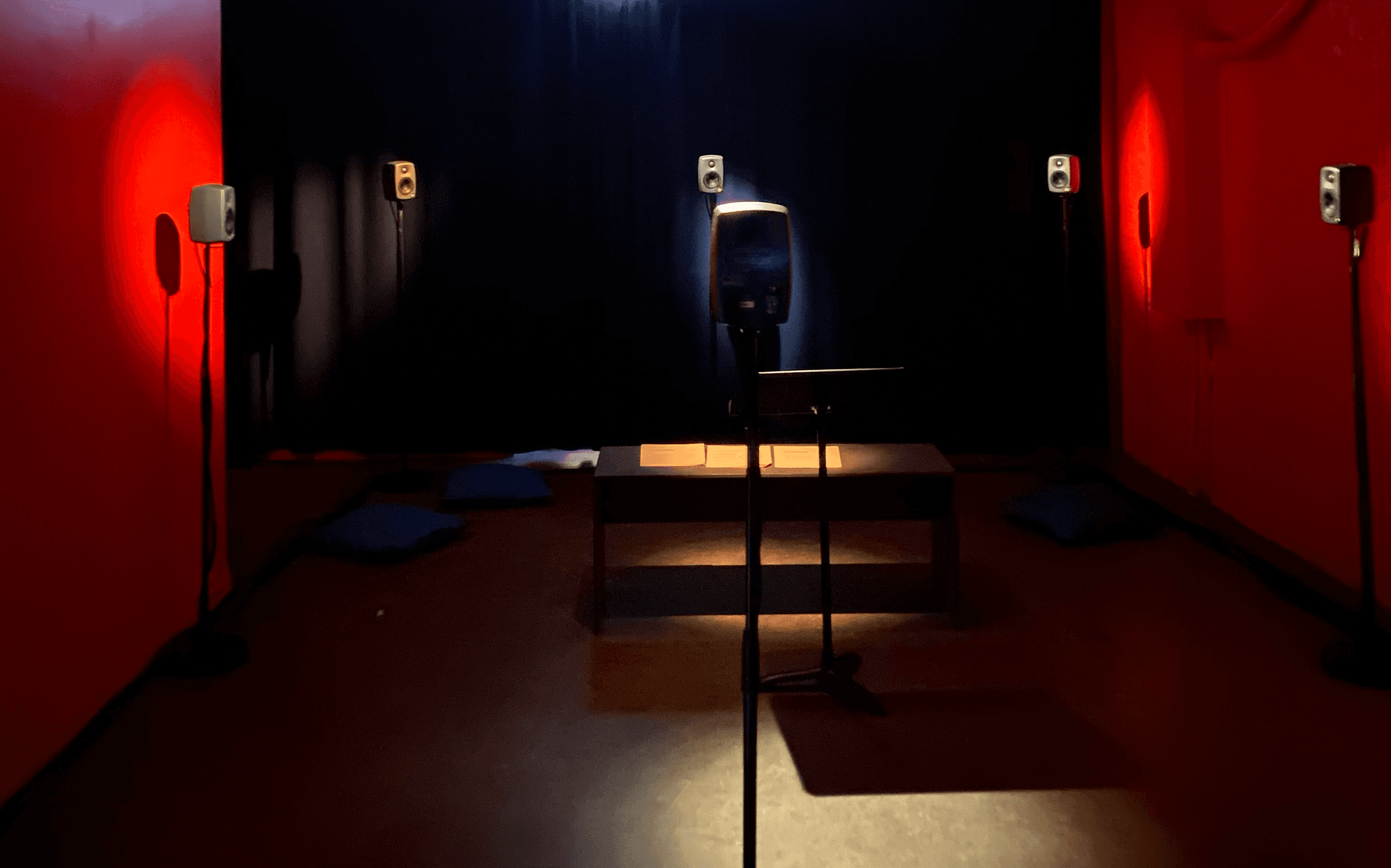
Installation, Vestre, Bergen
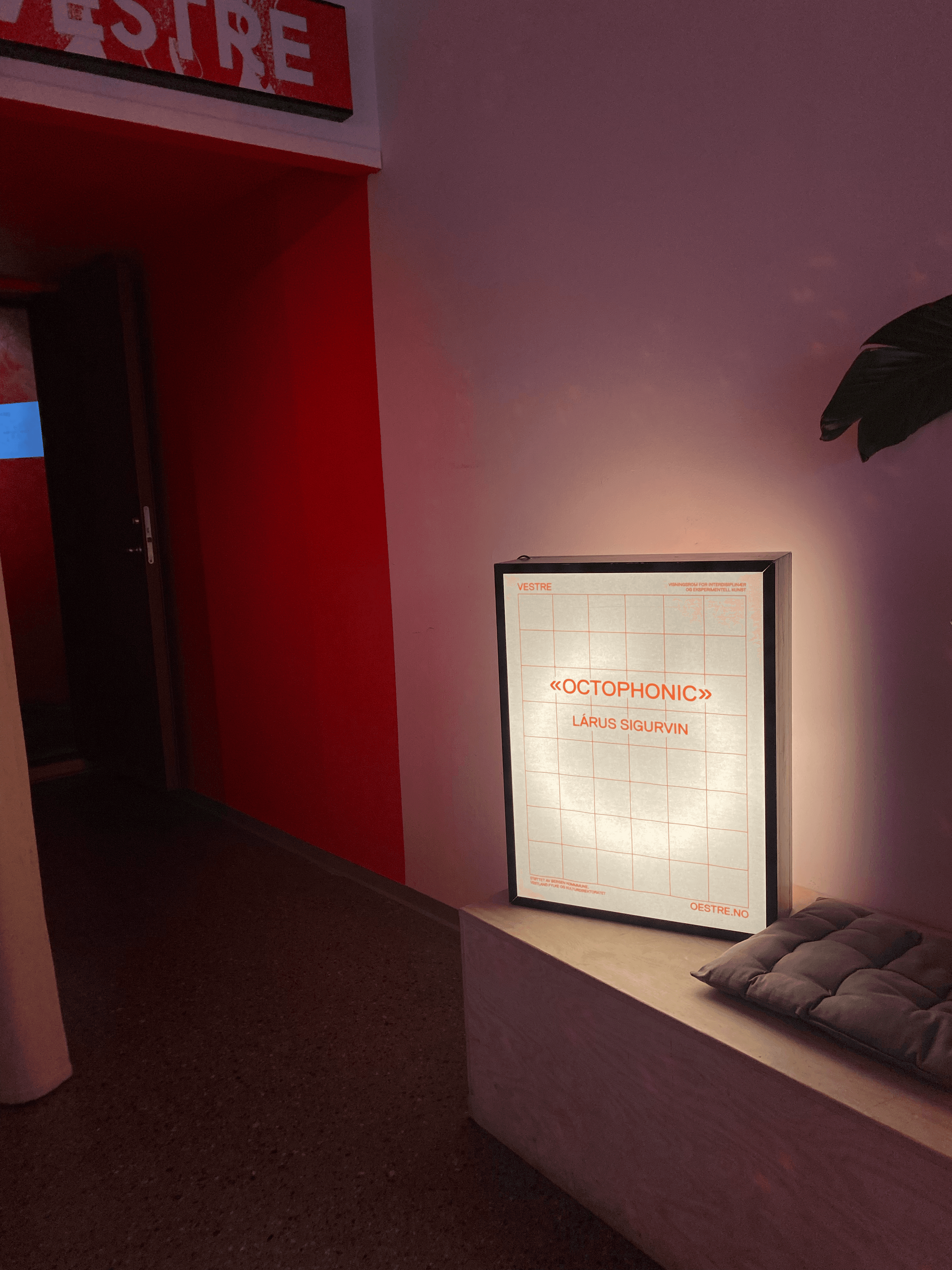
Vestre, Bergen
Installation, Vestre, Bergen